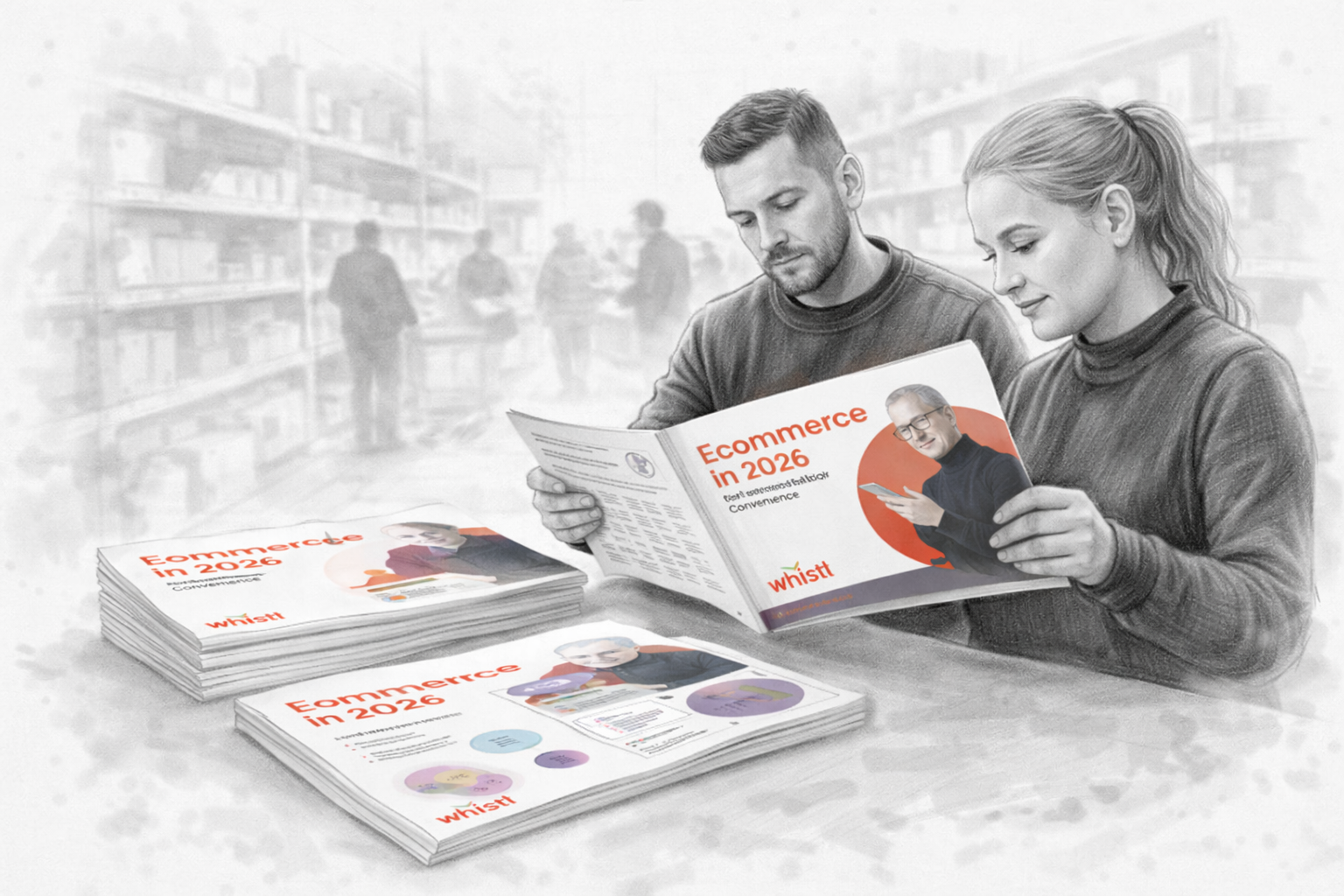
Most retailers optimising their delivery proposition right now are focused on two things: getting orders out faster and keeping shipping costs down. Both are reasonable priorities. But according to the Whistl Ecommerce in 2026: The Search for Clarity and Convenience report, they may not be the priorities that actually win customers. When 1,000 UK online shoppers were asked what mattered most to them, a clear returns policy came out on top. If that surprises you, it should prompt a rethink.
The headline finding from the Whistl research is straightforward: 57% of shoppers ranked a clear returns policy as the single most important delivery factor. Lowest delivery cost came in at 55%. Delivery visibility and tracking at 51%. The gaps are not enormous, but the ranking matters. Returns policy has not led this list before.
What makes this finding harder to ignore is what happens when you look at your most valuable customers specifically. Among shoppers buying online two to three times a week, the figure rises to 60%. These are not occasional browsers. These are the repeat buyers driving a disproportionate share of your revenue, and they are telling you that your returns policy is a purchase trigger, not an afterthought.
Approximately 60% of customers check the returns policy before making a purchase. That means your policy is being read before your product descriptions by a significant share of potential buyers. This is not a soft preference. It is a commercial reality.
%20copy.png)
Here is where the opportunity sits. Despite how much returns policy matters to shoppers, only 16% said returns were "very easy," with one in four describing the experience as neutral. That is a substantial gap between what people expect and what they are actually getting.
Think about what a clear returns policy does in a physical retail environment. A good refund guarantee removes the risk that stops someone picking something up off the shelf. Online, your returns policy does the same job. It tells the customer that if this does not work out, they will not be left dealing with a frustrating process or chasing a refund. Without that reassurance, hesitation sets in.
For clothing and footwear retailers specifically, this matters even more. Return rates in this sector are among the highest in ecommerce. Sizing uncertainty is real. Impulse purchases happen. Customers are making decisions based on product images and size guides rather than trying things on. A clear, easy-to-find returns policy directly addresses the risk they are taking every time they add something to their basket. Retailers who communicate that clearly will convert more browsers into buyers.
The bar, right now, is not especially high. Most retailers have a returns policy buried in their footer. The brands that bring it forward, make it plain, and back it up with a genuinely easy process will stand out.
Speed has not disappeared as a priority. It has just shifted. While older shoppers are most focused on free returns, Gen Z (51%) and Millennials (53%) say faster refunds would most improve their returns experience. The Whistl research makes this generational split clear, and it is a useful lens for retailers thinking about how to build their returns proposition.
This distinction matters. "Speed" in the context of returns is about the refund journey, not the outbound delivery. For younger shoppers especially, the time between dropping off a return and seeing money back in their account is where trust is won or lost. Retailers who can close that gap, whether through fast Shopify refund processing or by offering incentivised store credit as an immediate resolution, are better placed to retain those customers for the next purchase.
Half of frequent or occasional parcel locker users say they would prefer to use lockers for returns. That is not a future trend. It is a preference that already exists and is growing. Shoppers want flexibility in how they return, not just in how they receive.
We have seen this reflected in our own retailer data. Since making InPost available as a carrier option through our platform, a significant number of retailers have adopted it, and the uptake reflects genuine consumer demand rather than novelty. Parcel lockers remove friction at the point of return, and for shoppers who do not want to queue at a post office or arrange a collection, they are increasingly the preferred option.
Acquisition costs are rising. Repeat purchase rates are harder to sustain. The post-purchase experience, including what happens when something goes wrong, is where long-term customer relationships are built or broken.
A clear, easy, well-communicated returns policy is a commercial strategy. Retailers who treat returns as a cost to be minimised will lose ground to those who treat it as a retention tool. The Whistl Ecommerce in 2026: The Search for Clarity and Convenience report does not leave much room for ambiguity on this point.
If 57% of your potential customers are checking your returns policy before they buy, what does yours say about you? At Last is built to help clothing and footwear retailers answer that question well, with configurable returns workflows, seamless Shopify refund integration, and the carrier network to back it up.
%20copy.png)